Journal · Learn Astrology · Long Read
What Does an Astrologer Actually Do?
Astrologers do more than write horoscope columns. Here's what the work actually looks like — from chart interpretation and client sessions to research, writing, and teaching.
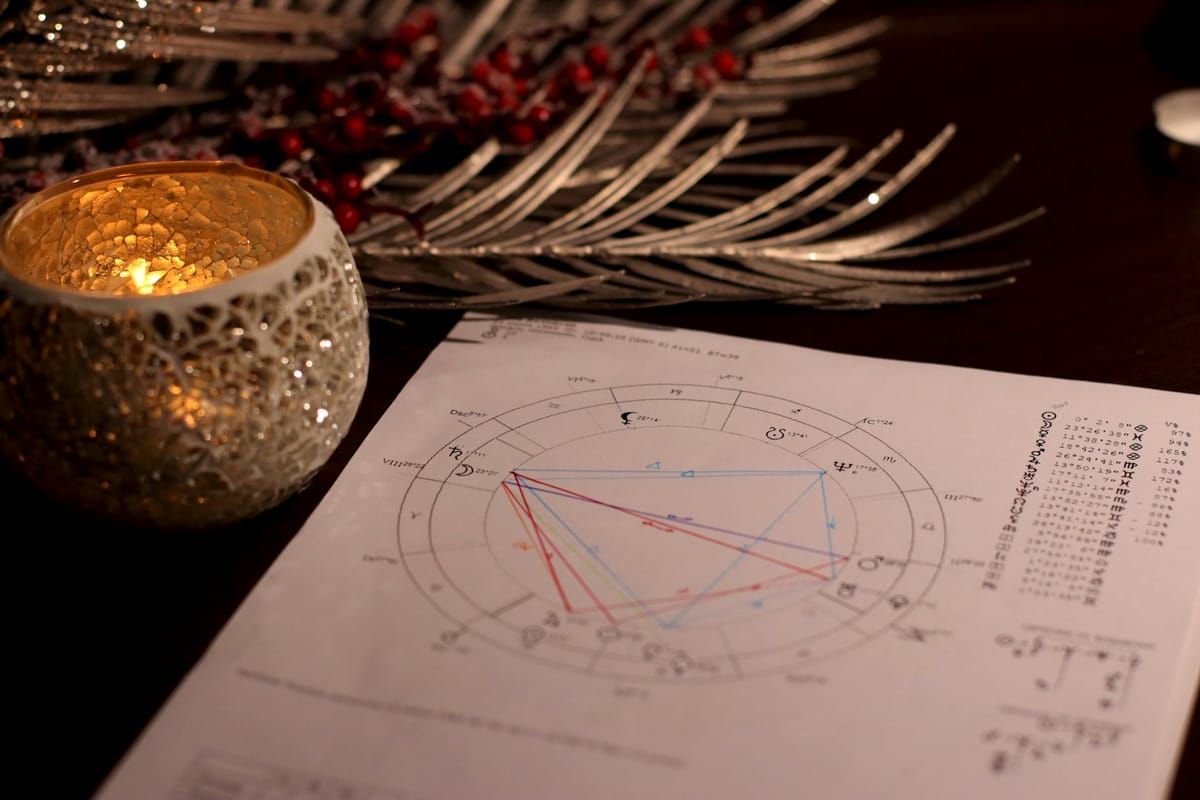
Astrology has been practiced for thousands of years and is believed to have originated in ancient Babylon before spreading through Egypt, Greece, India, and the Islamic world. Astrologers use the positions and movements of celestial bodies, such as the Sun, Moon, and planets, to interpret and analyze human behavior, relationships, timing, and events.
It's a complex field that requires extensive knowledge and training — but for those who are passionate about the subject, it can be a deeply meaningful career or calling. In this article, we'll answer common questions about what astrologers actually do, what their day-to-day work looks like, the variety of specializations available, and how to tell a serious astrologer from a horoscope-column stereotype.
What Do Astrologers Do?
Astrologers analyze astrological charts, which map the positions of celestial bodies at specific points in time. These charts are used to interpret personality traits, relationship dynamics, career potential, timing of events, and much more. Astrologers may also use astrology to forecast upcoming periods, guide important decisions, or offer perspective on challenges a client is facing.
In addition to chart analysis, astrologers typically offer consultations or readings to clients. During these sessions, the astrologer discusses the client's chart and answers questions about their life, relationships, career, or current circumstances. Some astrologers specialize in specific areas, such as financial astrology, medical astrology, or relationship astrology — but most start with general natal work.
What Does a Day in the Life of an Astrologer Look Like?
The day-to-day life of an astrologer varies greatly depending on their individual practice. Some work primarily with clients, providing readings and consultations either in person or online via video call. Others focus more on writing, teaching, or research. Many astrologers combine all of the above in a week.
A typical working day might include:
- Preparing for client sessions (reviewing charts, noting key aspects, planning topics)
- Running one to three consultations, each typically 60 to 90 minutes
- Writing horoscope columns, newsletters, or blog posts
- Studying current transits and what they mean for the coming weeks
- Research — whether into historical techniques, modern methods, or case studies
- Teaching or mentoring students
- Administrative work: scheduling, invoicing, responding to inquiries
Regardless of the specific mix, astrologers typically spend a lot of time studying and interpreting charts. This requires ongoing familiarity with many layers of technique: planetary movements, house systems, aspects, progressions, transits, and the language of interpretation itself.
Do All Astrologers Do the Same Thing?
No. Astrologers can have a wide range of specialties and focus areas. Here are some of the most common:
- Natal astrology — the study of an individual's birth chart, personality, and life path. The foundation most astrologers start with.
- Predictive astrology — forecasting events and timing using transits, progressions, and solar returns.
- Synastry and relationship astrology — comparing two charts to understand compatibility and relationship dynamics.
- Horary astrology — answering a specific question by casting a chart for the moment the question was asked. A very old technique making a modern comeback.
- Electional astrology — choosing auspicious times for important events like weddings, business launches, or surgeries.
- Mundane astrology — analyzing events on a global scale, such as political movements, elections, or economic cycles.
- Medical astrology — interpreting the body and health through the birth chart.
- Financial astrology — using planetary cycles to analyze markets and investment timing.
- Vedic astrology (Jyotish) — the Indian tradition, which uses a different zodiac and distinctive techniques.
- Hellenistic astrology — the original Greek tradition, recently revived through translation of ancient texts.
- Evolutionary astrology — a modern school focused on soul growth, karma, and the North Node's meaning.
Most professional astrologers develop depth in one or two areas rather than trying to master all of them.
What Actually Happens in a Chart Reading?
A typical natal reading follows a rough structure. The astrologer calculates the client's birth chart using their birth date, time, and location. During the session, they walk through the major signatures: Sun sign, Moon sign, Ascendant, key aspects, dominant elements, and the placements of the personal planets. They discuss what these mean in the context of the client's life and often focus on current transits — what's happening in the sky right now and how it's activating the client's chart.
Good readings feel like a conversation, not a monologue. The astrologer asks questions, listens, and adjusts the reading based on what the client actually wants to understand. The goal isn't prediction for its own sake — it's perspective that helps the client make better choices.
Is Being an Astrologer a Good Career?
Astrology can be a fulfilling career for those who are passionate about the subject. However, it's important to be realistic. Astrologers may face skepticism from those who don't consider astrology legitimate. Income varies widely — some earn a full-time living, others supplement a day job or treat it as a meaningful side practice.
Ultimately, the decision to pursue astrology as a career should be based on deep interest and dedication, not expectations of fast money. The practitioners who do well are usually the ones who would study astrology whether or not they were being paid for it.
How Much Do Astrologers Make?
Income potential varies widely. According to public salary data, full-time astrologers in the United States typically earn in a broad range from around $25,000 on the low end to well over $100,000 for established practitioners with a strong client base. Most working astrologers sit somewhere in the middle.
Income is influenced by:
- Experience and reputation — established astrologers command much higher fees than beginners
- Location and audience — those serving urban or international clients often charge more
- Specialization — niche fields like electional or business astrology can charge premium rates
- Diversified income — many astrologers combine readings with teaching, writing, courses, and memberships
How Do I Become an Astrologer?
To become an astrologer, you'll need to build a strong foundation in astrology and gain practical experience interpreting charts. Start with good books, take online or in-person courses, and practice constantly. Look for a mentor, join study groups, and attend conferences. Some aspiring astrologers pursue formal certification through organizations like NCGR, ISAR, or OPA, though this isn't strictly required to practice. Expect at least three to five years of study before feeling ready to take clients professionally.
What Tools Do Astrologers Use?
Professional astrologers typically work with a mix of chart-calculation software, reference books, and their own accumulated notes. Programs like Solar Fire, TimePassages, and the free astro.com handle the math. Ephemerides (tables of planetary positions) are still used by many practitioners for cross-checking and historical work. Most astrologers also maintain a personal library of dozens or hundreds of reference books on specific techniques, planetary cycles, and case studies from their field.
How Is a Real Astrologer Different From a Horoscope Column?
This is worth spelling out, because it's one of the biggest public misconceptions. A daily or weekly horoscope column reads current transits against the twelve Sun signs — twelve generalized forecasts for the entire population. It's a valid form of astrological writing, but it's necessarily broad.
A real astrological reading uses your full birth chart — your specific Sun, Moon, Ascendant, planetary placements, houses, and aspects. The level of specificity is completely different. A chart reading can tell you things about your actual life that a horoscope column could never approach. If you've ever found horoscope columns vague or unimpressive, you haven't actually seen what astrology can do.
Ethics and Responsibility
Professional astrology carries real ethical weight. An astrologer sits in a position of influence with clients who are often in vulnerable moments — facing relationship endings, career crises, grief, health scares, or major life decisions. A good astrologer is careful with that influence. They don't make catastrophic predictions about death or disease, don't create dependency, don't exploit fear, and know when to refer a client to a therapist or medical professional rather than trying to handle everything themselves.
Most major astrological organizations publish ethical guidelines their members are expected to follow. Common principles include client confidentiality, honesty about the limits of what astrology can do, avoiding predatory pricing, and refraining from reading charts for people who haven't consented. The best astrologers treat their work with the same seriousness a therapist or pastoral counselor would.
Myths About Astrologers
A few persistent stereotypes follow astrologers around:
- "Astrologers just tell you what you want to hear." Good astrologers tell you what they actually see in the chart, even when it's uncomfortable. That's the whole point.
- "All astrologers are flaky." Many professional astrologers are rigorous researchers with decades of training and a disciplined daily practice.
- "Astrology is just for women." Historically and currently, astrology has had serious practitioners of every gender. The field is more diverse than its public image suggests.
- "If it's not a science, it's worthless." Astrology operates in the space of meaning-making and symbolism, which is the same space philosophy, religion, and art operate in. It doesn't need to be physics to be useful.
What Skills Does a Good Astrologer Need?
- Technical fluency with charts, aspects, and techniques
- Interpretive intuition — the ability to synthesize many data points into a coherent story
- Active listening and conversational skill in sessions
- Psychological literacy — understanding human nature, defense mechanisms, and growth patterns
- Ethics — knowing what to say and what not to say, especially around health, death, and vulnerable topics
- Ongoing learning — the field is too deep to ever stop studying
Frequently Asked Questions
Is astrology considered a science?
No, astrology is not considered a science in the modern empirical sense. It's a symbolic and interpretive tradition. Some astrologers consider it an art; others see it as a form of divination or a psychological-symbolic language. Most serious practitioners don't claim astrology is physics.
Do astrologers predict the future?
Some do, within limits. Most contemporary astrologers focus less on specific predictions and more on identifying themes, timing, and likely patterns. A good astrologer is honest about what astrology can and can't reliably forecast.
What's the difference between an astrologer and a psychic?
An astrologer reads a chart — a technical, learnable skill based on astronomy and interpretation. A psychic claims direct intuitive access to information about a person or situation. Some practitioners do both, but the disciplines are different.
How do I find a good astrologer?
Look for someone with years of study, a clear specialization, client testimonials, and a professional approach. Certification through recognized organizations is one signal. Personal recommendations from people whose judgment you trust matter more than social media follower counts.
How much does a chart reading cost?
Prices vary widely. Beginners might charge $50 to $100. Mid-career astrologers typically charge $150 to $300 for a full natal reading. Well-known practitioners often charge $400 or more. Most sessions run 60 to 90 minutes.
Can astrologers work from anywhere?
Yes, especially since video consultations became standard. Many astrologers have international client bases and can work from anywhere with a stable internet connection.