Journal · planets · Long Read
Opposition in Astrology: Balance, Tension, and Polarity
An opposition in astrology is a 180-degree aspect that creates tension, awareness, and the chance to hold two sides of a life theme at once.
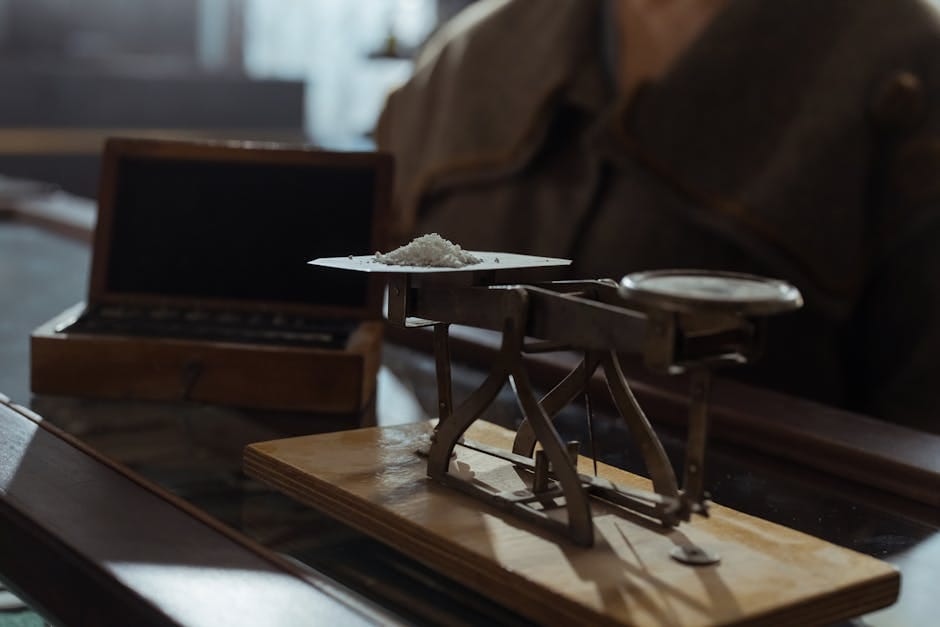
An opposition in astrology is one of the most misunderstood aspects in the chart. It looks like a conflict on paper — two planets glaring at each other from opposite sides of the zodiac — but it's actually one of the most instructive patterns you can have. Oppositions force awareness. They make you see both sides of something you'd probably rather keep simple.
If you've spotted an opposition in your birth chart and felt a small wave of dread, relax. This guide walks through what oppositions really mean, where they come from, how to read them by planet and house, and how to actually work with them instead of against them.
What Is an Opposition in Astrology?
An opposition happens when two planets sit directly across from each other in your birth chart — roughly 180 degrees apart. Think of it like two people standing at opposite ends of a room, facing each other. There's a natural tension between them, but also a direct line of sight. Neither planet can ignore the other.
In Western astrology, the opposition is one of the five major aspects, alongside the conjunction, sextile, square, and trine. Astrologers usually allow an orb of about 6 to 10 degrees, meaning planets don't have to be at exactly 180 degrees — close enough still counts, with tighter orbs producing stronger effects.
Where the Opposition Comes From
Aspects as a concept trace back to Hellenistic astrology, building on mathematical ideas borrowed from Babylonian sky-watchers. The word "opposition" is literal — two celestial bodies on opposite sides of the sky. Ancient astrologers treated it as a challenging or malefic aspect, a source of conflict and imbalance.
Modern astrology has softened that interpretation without throwing it out. Yes, oppositions create friction. But friction produces awareness, and awareness is the beginning of any meaningful change. The opposition is now understood as one of the most instructive aspects in a chart, not just a warning sign.
How an Opposition Works in Your Chart
When you have an opposition, it points to an area of life where you're pulled in two directions at once. The two planets represent needs or drives that feel like they're working against each other. One often gets suppressed while the other takes over — or you swing back and forth between them without finding a middle ground.
The signs and houses those planets occupy tell you what the tension actually looks like. Oppositions always fall across complementary sign pairs: Aries and Libra, Taurus and Scorpio, Gemini and Sagittarius, Cancer and Capricorn, Leo and Aquarius, Virgo and Pisces. Each pair represents a polarity — a life theme with two halves that need each other, even if they don't like each other.
The Difference Between Tension and Conflict
It's worth drawing a clear line between tension and conflict, because oppositions produce the first but not necessarily the second. Tension is structural — it's just the geometry of two forces pulling against each other. Conflict is what happens when that tension is mismanaged, ignored, or forced into one-sided resolution. People who understand their oppositions often report that the tension remains, but the conflict dissolves. You stop fighting yourself and start using the tension as productive energy.
Oppositions by House Axis
Houses matter as much as signs. An opposition across the 1st and 7th houses shows up as a push-pull between self and partner — your own needs versus what you give relationships. The 2nd/8th axis is about your resources versus shared resources and intimacy. The 3rd/9th axis contrasts immediate thinking with big-picture belief. The 4th/10th is the classic tension between private life and public role. The 5th/11th pits personal creativity and romance against group belonging. The 6th/12th juxtaposes daily routine with the unconscious and retreat.
Whatever axis your opposition lands on is an area you're meant to pay conscious attention to. The goal isn't to pick a side. It's to hold both ends of the bar at once.
A Real Example: Sun Opposite Moon
Say someone has the Sun in Aries in the 1st house, opposite the Moon in Libra in the 7th. The Sun in Aries wants independence, direct action, and personal identity. The Moon in Libra craves connection, harmony, and partnership. Both are healthy needs. They just pull in opposite directions.
This person might throw themselves into relationships and lose their sense of self, or protect their independence so fiercely that intimacy feels threatening. The opposition doesn't doom them to that struggle forever. It makes the tension visible, which is the first step to working with it. Over time, many people with this placement learn to be fully themselves and be in close relationships — not by compromising one for the other, but by letting both coexist.
Common Misconceptions
A lot of people assume an opposition is automatically bad news. That's an oversimplification. Oppositions can be genuinely difficult, especially when you're young and haven't yet recognized the pattern. But they also produce a kind of nuance that easier aspects don't. People with strong oppositions often develop real depth around the themes involved because they've had to wrestle with both sides personally.
Another common mistake is treating the opposition as a fixed flaw. It's not static. Aspects describe ongoing dynamics, not life sentences. You can grow into an opposition the same way you grow into any other part of your chart — gradually, with self-awareness.
The Hidden Gift of an Opposition
Here's something easy-aspect people rarely understand: oppositions force consciousness. You don't get to coast with an opposition the way you sometimes can with a trine or a sextile. The tension keeps surfacing until you look at it. That sounds exhausting, and sometimes it is, but it also produces people who actually know themselves. Most of the deepest self-awareness you'll find in any astrology chart comes from the hard aspects — squares and oppositions — not the smooth ones.
People with prominent oppositions often become good mediators, counselors, and negotiators later in life because they've already done the internal work of balancing two sides. It's hard-won skill, but it's real skill.
Practical Tips for Working With an Opposition
The simplest move is to identify which planet you tend to lean on and which one you neglect. Most people with an opposition overuse one side and ignore the other. If your Mars is opposite your Venus, ask honestly: do you default to assertion or accommodation? The answer points to the side you need to develop.
It also helps to look for the midpoint — the empty space between the two planets. Ancient astrologers saw oppositions as pointing toward a third position, a place of integration that isn't either extreme. Working with that midpoint is a lifelong project, not a weekend task.
Oppositions in Relationships and Synastry
When astrologers compare two people's charts — a technique called synastry — oppositions between their planets are incredibly common. In fact, many romantic relationships are built on them. Your Venus sitting opposite your partner's Mars, for example, creates a magnetic attraction with built-in friction. It's the chemistry of opposites, and it's one of the most classic indicators of romantic tension in relationship astrology.
Oppositions in synastry aren't necessarily bad — they often make relationships interesting and dynamic. The trick is recognizing that the same tension that pulls you together can also burn you out if you don't learn to manage it. Long-term relationships with strong oppositions tend to require more conscious communication than relationships built on smoother aspects like trines.
Oppositions Between Specific Planets
Sun opposite Moon is the classic — it's the energy of a full moon, built right into your chart. People born near a full moon carry a lifelong awareness of the tension between self and other, conscious and unconscious, yang and yin. Venus opposite Mars creates a push-pull between desire and assertion, often showing up in romantic dynamics where attraction and conflict feel tangled together. Mercury opposite Jupiter is a classic "big idea versus small detail" aspect — the person often bounces between grand vision and precise analysis.
Saturn opposite any personal planet tends to feel the heaviest, because Saturn adds weight wherever it touches. Saturn opposite Sun often shows up as authority struggles or a sense of being tested by father figures and institutions. Saturn opposite Moon can feel like emotional coldness early in life that slowly warms into wisdom. Pluto oppositions are rarer and generational, but when they hit a personal planet, they bring deep transformation to whatever that planet represents.
Natal Oppositions vs Transit Oppositions
A natal opposition is a lifelong dynamic woven into your personality. A transit opposition is a temporary event — a planet currently in the sky forming a 180-degree angle to one of your natal planets. Transit oppositions often coincide with moments of relationship tension, competing demands, or a sense of being forced to look at both sides of a situation. They usually pass within days or weeks, depending on the planet involved.
The slower the transiting planet, the longer the opposition lasts and the more significant it tends to feel. A transit Saturn opposition can linger for months and mark a genuine turning point. A transit Mercury opposition is usually a 24-hour blip.
Related Terms and Concepts
If you're exploring oppositions, you'll want to get familiar with the other major aspects: conjunction, sextile, square, and trine. Understanding the 12 houses also helps, because the house axis shapes what the opposition actually looks like in daily life. And if you want to check for oppositions in your own chart, run a free birth chart calculator and look for planets 180 degrees apart.
Frequently Asked Questions
Is an opposition a bad aspect?
No. Oppositions create tension, but they also build awareness. Modern astrology treats them as challenging but instructive, not inherently negative.
How close do planets need to be for an opposition to count?
Most astrologers use an orb of 6 to 10 degrees. The tighter the orb, the stronger the aspect.
Can oppositions be resolved?
They can be worked with, but not eliminated. The goal is integration — learning to hold both sides rather than choosing one and abandoning the other.
Do transit oppositions matter as much as natal ones?
Transit oppositions are temporary, while natal oppositions are lifelong. Both can be significant, but natal oppositions shape personality while transits mark moments of pressure or awareness.
What's the difference between an opposition and a square?
A square is a 90-degree aspect that creates internal friction. An opposition is 180 degrees and tends to play out between you and other people or between two parts of your life.
The Takeaway
An opposition is a polarity, not a punishment. It shows you the two ends of a theme you're here to learn — and the more you understand both ends, the more useful the aspect becomes. Tension is a teacher, if you let it be one.