Journal · Learn Astrology · Long Read
The 5 Major Aspects in Astrology Explained
Aspects are the angles between planets in a birth chart — and they're how astrologers read the dynamic energy of a horoscope. Here's a clear breakdown of all five major aspects and what each one means in practice.
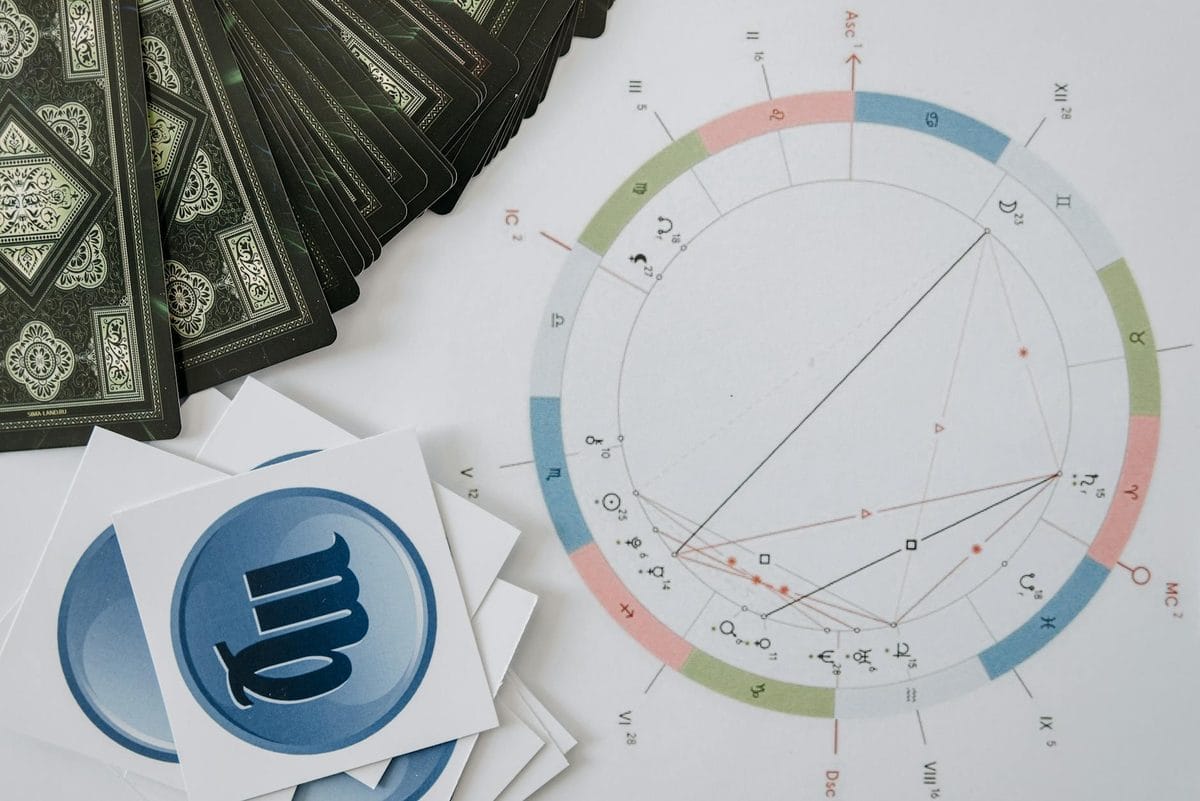
Astrology is an ancient practice that uses celestial bodies to track human patterns and forecast potential. One of its key components is the concept of aspects — the angles formed between planets in a birth chart. Aspects are where astrology stops being a list of signs and starts becoming a living map of dynamics.
In this guide, we'll walk through the five major aspects every astrologer learns first, explain what each one does, and show you how they apply to everyday chart reading and forecasting.
What Is an Aspect in Astrology?
An aspect is the angular relationship between two or more planets, measured in degrees of the zodiac. Every planet sits somewhere on the 360-degree wheel of the birth chart, and astrologers draw lines between them based on the angles they form. Some angles are considered meaningful; others aren't.
The five major aspects — conjunction, sextile, square, trine, and opposition — are called the Ptolemaic aspects because they were codified by the Greek astronomer-astrologer Ptolemy in the 2nd century AD. They've been the backbone of Western astrology ever since.
What Purpose Do Aspects Serve?
Aspects show you how the planets in your chart interact. A planet doesn't operate in isolation — its expression is shaped by which other planets it's connected to and how. Aspects tell you whether two planetary energies blend easily, clash, or push each other into action.
In practice, this means aspects reveal the central dynamics of a personality: the natural talents, the inner conflicts, the growth edges, the tensions that drive the person forward. Without aspects, a chart is just a list of placements. With them, it becomes a story.
Harmonious vs. Challenging Aspects
Traditionally, aspects are divided into two broad categories:
- Harmonious (soft) aspects: sextiles and trines. These let energy flow easily between planets. They produce talent, ease, and opportunity — but also the risk of passivity.
- Challenging (hard) aspects: squares and oppositions. These create friction between planets. They're uncomfortable but productive — they're the aspects that make you grow.
- Conjunctions are neutral. They blend two planets into one unit, and whether that blend is comfortable depends entirely on which planets are involved.
Modern astrologers are careful not to treat hard aspects as "bad" or soft aspects as "good." A chart full of easy aspects can produce an unmotivated person, and a chart full of squares can produce someone who accomplishes enormous things.
The 5 Major Aspects of Astrology
1. Conjunction (0°)
A conjunction occurs when two planets sit within about 8 degrees of each other in the same sign. This aspect is the strongest in astrology because the two planets effectively merge — their energies blend into a single unit that operates as one.
Whether a conjunction feels harmonious or difficult depends on the planets involved. A Venus-Jupiter conjunction tends to be lucky in love and finance. A Mars-Saturn conjunction can indicate someone who struggles with frustration but builds extraordinary discipline over time. A Sun-Moon conjunction (a new-moon birth) suggests someone whose conscious and emotional sides are instinctively aligned.
2. Sextile (60°)
A sextile forms when two planets are approximately 60 degrees apart, typically in signs of complementary elements (fire-air or earth-water). This is considered a harmonious aspect and signifies opportunity — the doors are open, but you still have to walk through them.
Sextiles differ from trines in one important way: they require action. A trine gives you natural talent; a sextile gives you a chance that rewards effort. A Moon-Venus sextile, for example, indicates someone who can express their emotions in a creative and harmonious way — if they're willing to put the work into their craft or relationships.
3. Trine (120°)
A trine occurs when two planets are approximately 120 degrees apart in signs of the same element (two fire signs, two earth signs, etc.). This is the most flowing aspect in astrology and signifies ease in the areas of life the planets represent.
A Sun-Uranus trine may indicate someone who can embrace their unique qualities and express themselves originally without fear. A Mercury-Neptune trine suggests natural creative imagination and intuitive communication. The downside: trines don't demand anything, so their gifts can lie dormant if the person never feels pushed to use them.
4. Square (90°)
A square occurs when two planets are approximately 90 degrees apart, typically in signs of the same modality (cardinal, fixed, or mutable) but different elements. Squares are the friction aspects of astrology — they produce conflict between the two planets involved.
That conflict is uncomfortable, but it's also the engine of growth. Squares are the aspects that push people to change, build, and overcome. A Mars-Pluto square can indicate someone who struggles with power dynamics early in life but eventually becomes unusually effective at navigating them. Most high achievers have squares working them hard from the inside.
5. Opposition (180°)
An opposition occurs when two planets sit exactly across the chart from each other, 180 degrees apart. Oppositions create a sense of tension between two planetary energies that want different things.
Unlike squares, which are internal, oppositions often play out through other people. The planet on the opposite side of the chart can feel "over there" — something you encounter in partners, clients, or rivals rather than in yourself. The growth work of an opposition is integration: learning to hold both sides of the polarity inside yourself rather than projecting one half outward.
Orbs: How Close Is Close Enough?
Aspects aren't always exact. An "orb" is the number of degrees of deviation allowed before an aspect is considered too wide to count. For the major aspects, typical orb allowances are:
- Conjunctions, squares, trines, oppositions: 6–8 degrees for personal planets, tighter for outer planets
- Sextiles: about 4–5 degrees
- Aspects involving the Sun or Moon: sometimes wider, up to 10 degrees
The closer the orb, the stronger the aspect. An exact square (0 degrees of orb) will be much more noticeable than a wide one.
How Aspects Apply to Chart Readings and Forecasts
Aspects play a significant role in every kind of astrological interpretation. In a natal reading, they show the core dynamics of the personality — the inner agreements and conflicts that shape the person's life. Someone with a conjunction between their Sun and Moon has a strong sense of identity and emotional stability. Someone with a Venus-Jupiter trine tends to attract abundance in love and finances. Someone with a Mars-Saturn square has to work hard to push past inner resistance before acting.
Aspects also drive predictive astrology. Astrologers track transits — the aspects currently forming between moving planets and your natal chart — to forecast upcoming events and energies. A transiting Saturn square to your natal Sun suggests a period of testing and restructuring. A transiting Jupiter trine your natal Venus opens a window of social and creative good fortune. By knowing an aspect is coming, you can prepare to use it well.
Applying vs. Separating Aspects
There's one more technical layer worth knowing. Aspects are either applying (moving toward exactness) or separating (moving away from exactness) depending on the relative speeds and positions of the two planets. In natal astrology, applying aspects are often considered stronger and more future-directed — the energy between the planets is still building. Separating aspects are sometimes read as carrying karmic or inherited themes, with the energy already past its peak by the moment of birth. In predictive work, applying transits are the ones to watch — they're the ones still moving toward something.
How Aspects Combine in a Chart
Aspects never operate in isolation. A planet is usually connected to several others through different aspects, and the overall pattern matters more than any single connection. A Mars that's both squared by Saturn and trined by Jupiter is a different Mars than one with either aspect alone. Skilled chart reading is largely the art of synthesizing many simultaneous aspects into a coherent personality picture — which is why it takes years to develop fluency.
Minor Aspects: Beyond the Big Five
The five major aspects are the foundation, but astrologers also use several minor aspects for nuance. These include:
- Semi-sextile (30°): A subtle, slightly uncomfortable connection between adjacent signs.
- Quintile (72°): Associated with creative gifts and unique talents.
- Sesquiquadrate (135°): A milder friction aspect, similar in feel to a square.
- Quincunx or inconjunct (150°): An aspect of adjustment — planets that don't naturally communicate and require conscious integration.
Most beginners start with the five majors and add minors only after they've built fluency with the basics.
Frequently Asked Questions
Which aspect is the strongest?
Conjunctions are generally considered the strongest because they merge two planetary energies completely. After that, oppositions and squares tend to be the most noticeable because their tension is hard to ignore.
Are hard aspects bad?
No. Squares and oppositions are uncomfortable but productive. They drive growth, motivation, and achievement. Many of the most accomplished charts are full of hard aspects — the friction is what pushes people to build something.
Can you have too many aspects in your chart?
Every chart has plenty of aspects. What matters is which ones are closest to exact and which involve personal planets. A chart with many exact aspects tends to feel intense and eventful; a chart with mostly wide orbs feels calmer but sometimes less dynamic.
How do I find aspects in my own chart?
Use a free birth chart calculator. Most will generate an aspect grid alongside the chart wheel, listing every aspect between your planets with the exact degrees and orbs.
Do aspects change over time?
The natal aspects in your birth chart are fixed for life. But transiting aspects — the ones formed by the moving planets in the current sky — change constantly. Those transits interact with your natal aspects to create the ongoing texture of your life.
What's the difference between a trine and a sextile?
Both are harmonious, but a trine is a stronger, more effortless flow (120 degrees) while a sextile is a lighter opportunity (60 degrees) that requires action to activate.
Aspects and the 12 Houses
One final layer worth mentioning: aspects interact with the 12 houses of astrology in important ways. When two planets form an aspect across specific houses, the tension or flow shows up in those specific areas of life. A Mars-Saturn square across the 2nd and 5th houses, for example, points to friction between financial responsibility and creative or romantic risk. The aspect supplies the dynamic; the houses tell you where to look for it.
Final Thoughts
Aspects are the grammar of astrology. Without them, planetary placements are just vocabulary — with them, the chart speaks in full sentences. Whether you're learning to read your own chart or preparing to work with clients, understanding the five major aspects is one of the most valuable skills you can build. Start by finding them in your own chart, notice how they show up in your life, and watch astrology come alive in a way that zodiac sign basics alone can never match.