Journal · Birth Charts & Tools · Long Read
Can Astrology Predict the Future? What It Can (and Can't) Do
Can astrology predict the future? Kind of — but not the way most people think. Here's what astrology can actually tell you, what it can't, and why free will still matters.
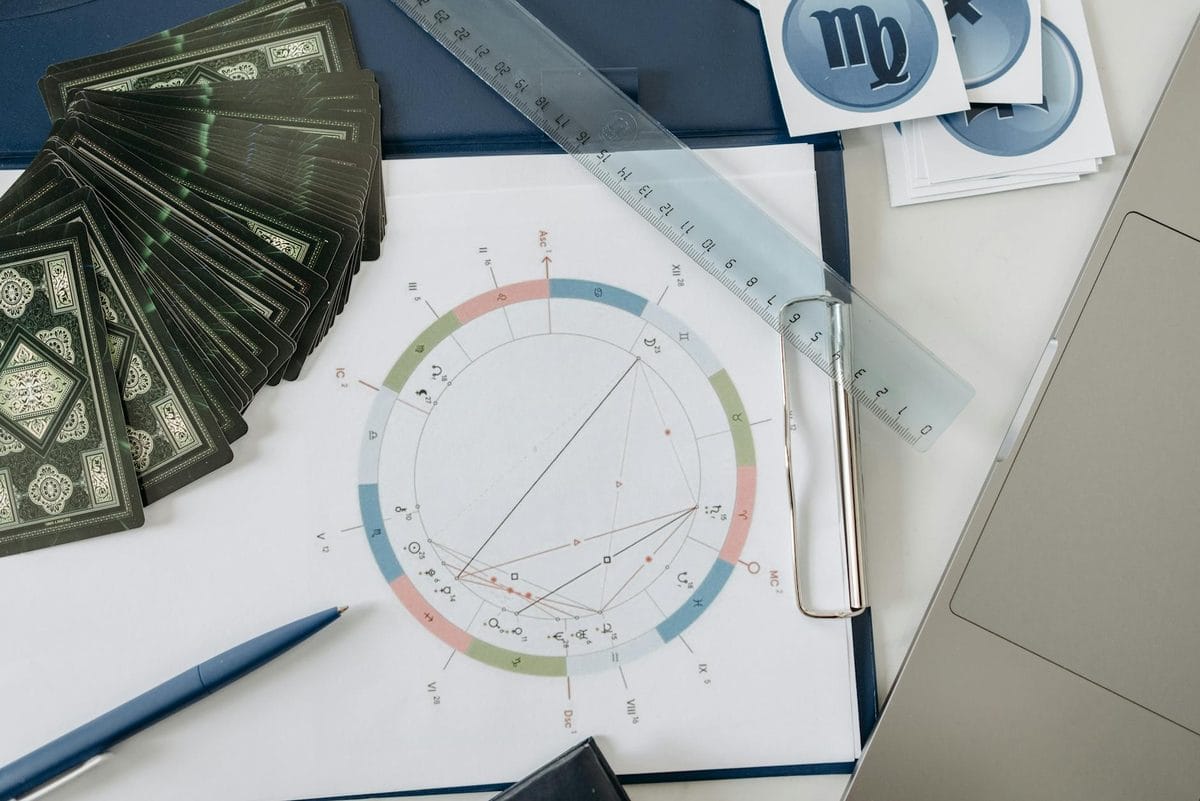
Astrology has been around for centuries, and many people turn to it for guidance in various aspects of their lives. One of the most common questions asked about astrology is whether it can predict the future. In this article, we'll explore what astrology can genuinely offer, where its limits are, and why the honest answer is more interesting than a simple yes or no.
The short version: astrology is better at describing patterns and likely pressures than at predicting specific events. Knowing the difference changes how useful the practice becomes.
Why Is Astrology So Accurate?
Astrology is often cited as being remarkably accurate, even by skeptics who try it once out of curiosity. This is because astrology is based on the idea that everything in the universe is interconnected, and that the movements of the planets and stars correlate with patterns in human life. The positions of the planets at the time of your birth, for example, are believed to reflect your personality traits and general life path.
Additionally, astrologers use a variety of tools and techniques to create charts and make predictions — including the study of planetary transits, solar returns, and secondary progressions. They also take into account the position of the Moon, which is thought to have significant influence on emotional state and timing.
If Astrology Is Accurate, Why Can't It Predict the Future?
While astrology can be incredibly accurate in describing personality traits and life themes, it is not a tool for predicting the future with absolute certainty. The future is not set in stone, and there are many variables that can impact the outcome of any situation — including the one variable astrology takes very seriously: human choice.
Astrology is more of a tool for gaining insight into potential outcomes and understanding the energies at play in a given situation. It can help you navigate challenges and make informed decisions based on planetary alignments and other astrological factors. But it describes weather patterns, not individual raindrops.
What Astrology Predictions Are Based On
Astrology predictions are based on the study of planetary transits and their interaction with a natal chart. Astrologers use a few core techniques to create forecasts:
Planetary transits occur when a planet moves across a particular point in the sky and activates something in your birth chart. These transits are used to identify potential challenges or opportunities based on the position of the planets at a given time.
Solar returns occur when the Sun returns to the exact position in the sky it occupied at your birth. This marks the beginning of a new personal year, and astrologers use the solar return chart to forecast the upcoming twelve months.
Progressions are another tool used by astrologers to make predictions. Progressed charts are based on the idea that each day after birth symbolically corresponds to a year of life, producing a slow-moving inner chart that reveals developmental themes.
Where Does Astrology Come From?
One of the earliest known astrological systems was developed by the Babylonians around 2000 BCE. They were the first to create a system of 12 zodiac signs and associate them with constellations in the night sky. The Babylonians also developed the concept of astrological transits, tracking the movement of planets relative to a person's birth chart.
The ancient Egyptians also had a strong tradition of astrology. They believed the movements of the stars and planets reflected the gods and goddesses and could influence events on Earth. They used astrology to predict everything from the flooding of the Nile to the outcome of battles.
In India, astrology has been integral to Hindu culture for thousands of years. Vedic astrology, also known as Jyotish, is one of the oldest and most complex astrological systems in the world. It's based on the belief that planetary positions at birth reveal important information about character, life path, and destiny.
In China, astrology has been practiced for more than 2,000 years. Chinese astrology uses a 12-year cycle of animals, with each year associated with a different animal sign. It's believed that a person's birth-year animal provides insight into their personality and life path.
In modern times, astrology has continued to evolve and adapt. Today, many different systems are practiced around the world, including Western astrology, Vedic astrology, Chinese astrology, and more.
Western astrology — the most widely practiced form in the West — is based on the tropical zodiac, a 12-month cycle that begins with Aries in the spring. Vedic astrology uses the sidereal zodiac, which is based on fixed stars. Despite their differences, all these systems share a belief in the interconnectedness of the universe and the idea that celestial positions offer insight into life.
What Astrology Can Genuinely Predict
Let's get specific. Here's what astrology does well in terms of prediction:
- Timing pressures and opportunities. Major transits — Saturn returns, Jupiter transits, Uranus oppositions — reliably correlate with real-life periods of challenge, growth, or change.
- Emotional tone and inner themes. Progressed Moon, solar arc directions, and secondary progressions can describe the emotional weather of a given year with surprising accuracy.
- Areas of life under activation. Transits to specific houses tell you where the action is concentrated — career, relationships, health, creativity, home.
- Constitutional and personality patterns. The natal chart describes traits and tendencies that hold up over time.
What Astrology Can't Reliably Predict
And here's where it falls short:
- Specific events. "You'll get engaged on September 14th" is not something an honest astrologer can say with confidence. Astrology shows pressure; it doesn't dictate outcome.
- Other people's choices. You can read your own chart with reasonable insight, but you cannot predict with certainty what someone else will do.
- Pure chance. Some of what happens in life is genuinely random — coincidence, accident, opportunity. Astrology doesn't map every grain of sand.
- Exact timing. Even experienced astrologers give date ranges, not precise days, because transits operate over windows, not moments.
Astrology vs Other Forms of Divination
Astrology gets compared to tarot, palmistry, runes, and other divination systems, but it's structurally different in important ways. Astrology is rule-based and reproducible — given the same birth data and the same techniques, two competent astrologers will arrive at very similar interpretations. Tarot is interpretive and intuitive — two readers pulling the same cards may produce very different readings. Both can be valuable, but they answer different kinds of questions. Astrology excels at long-term patterns, timing, and constitutional understanding. Tarot excels at present-moment guidance and creative reflection on a specific situation. Many practitioners use both, treating them as complementary rather than competing tools.
Why People Often Feel Astrology "Predicted" Something
If astrology can't predict specific events, why do so many people swear it accurately forecasted something in their lives? A few reasons. First, astrology genuinely does describe themes and pressures, and when someone experiences a major life event during a major transit, the correlation feels predictive. Saturn transiting your 7th house often coincides with relationship endings or major commitments — both possibilities live within "Saturn pressure on partnerships." Second, people remember the hits and forget the misses, a well-known cognitive bias. Third, when a reading describes a tendency you already feel but haven't named, it can feel like the astrologer is reading your future when really they're describing your present. None of this means astrology is useless. It means the way it works is more subtle than literal prediction — and arguably more useful.
Free Will and Astrological Prediction
The oldest debate in astrology is the one between fate and free will. Most modern astrologers land somewhere in the middle: the chart describes the tendencies, pressures, and themes you're likely to encounter, while your choices within those pressures shape the actual outcome. A Saturn transit doesn't cause a divorce — it creates a period of pressure on commitments, and what you do under that pressure determines what happens next.
This is why consulting your birth chart is useful: it gives you information about the conditions you're operating in, so you can respond with more awareness.
Should We Believe in Astrology or Not?
Belief in astrology is a personal choice, and there's no right or wrong answer. Some people find astrology a valuable tool for gaining insight and understanding; others don't place much stock in it. Both can be reasonable positions depending on how you relate to symbolic systems.
It's important to remember that astrology is not a substitute for professional advice or medical treatment. It should be used as a tool for gaining insight — not as a means of making critical life decisions alone.
How to Use Astrology for Forecasting Without Overdoing It
A balanced approach:
- Check your transits at the start of each month or year to understand the general themes.
- Note the houses being activated, not just the planets involved.
- Don't make major decisions based on a single transit — look at the whole picture.
- Pair astrology with grounded self-awareness, not fear.
- Remember that "difficult" transits often correspond to the most meaningful growth periods.
Final Thoughts on Astrology Telling the Future
While astrology may not be able to predict the future with absolute certainty, it can provide real insight and guidance into the potential influences and energies that may affect a person's life. Astrology predictions are based on the positions of the planets and celestial bodies, and they can be useful for understanding personality traits, life themes, and potential challenges and opportunities.
Ultimately, we have the power to make our own choices and shape our own direction. Whether astrology plays a role in that is up to you. Ready to explore your own chart? Start with a free birth chart calculation.
Frequently Asked Questions
Can astrology predict exact events?
No. Astrology describes pressures, themes, and likely timing windows, but not specific events. An honest astrologer gives ranges, not certainties.
How accurate are astrological predictions?
Accurate for themes and timing windows, less accurate for specific outcomes. Accuracy depends heavily on the astrologer's skill and the quality of the birth data.
Does astrology work for everyone?
The astrology itself works the same way regardless of belief, but its usefulness depends on how willing you are to engage with it as a reflective tool.
Is Vedic astrology more accurate than Western astrology?
They use different zodiacs and techniques, and both have strong practitioners. Neither is objectively "more accurate" — they answer somewhat different questions.
Can astrology predict death?
Traditional astrology had techniques for this, but most modern astrologers refuse to forecast death and consider it ethically problematic. It's beyond what astrology can responsibly do.
How often should I check my transits?
Monthly is a healthy rhythm for most people. Daily checking usually produces anxiety, not insight.
Do astrologers ever get the future right?
Yes, often — especially with timing and theme. They get specific events less reliably. The best astrologers are honest about which is which and frame their forecasts accordingly. A trustworthy astrologer will say "this is a period when X is more likely" rather than "X will definitely happen on this date."