Singleton Planet in Astrology: The Lone Planet That Runs Your Chart

What Is a Singleton Planet?
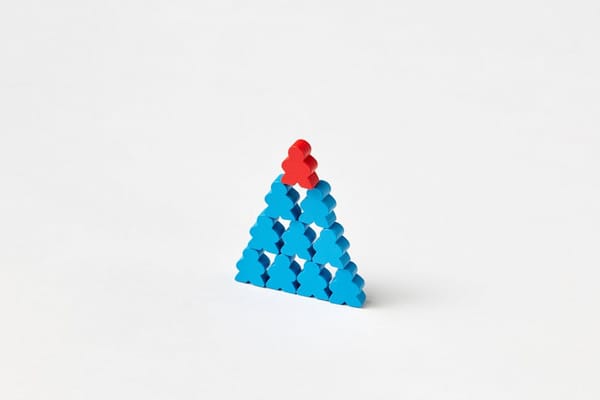
A Singleton Planet is simply a planet that stands alone on one side of your chart while every other planet clusters on the opposite side. Imagine drawing a line through the middle of your Birth Chart — if one planet sits by itself on one half, and the remaining nine crowd onto the other half, that lone planet is your singleton. It's outnumbered, isolated, and because of that, it tends to punch above its weight in how you think, act, and move through life.
Where Does This Term Come From?
The singleton concept grew out of a technique called chart shaping, which became widely used in the twentieth century. Astrologers noticed that the overall pattern of planets in a chart — how they're distributed around the wheel — said something meaningful about a person's psychology and energy. Marc Edmund Jones, an American astrologer writing in the 1940s, was one of the first to formalize these patterns and give them names. The singleton emerged from his work as a way to identify the planet that acts as a kind of pressure valve or pivot point for the whole chart.
What Does a Singleton Planet Mean in Your Chart?
When you have a singleton, that planet carries unusual weight. Because it's isolated, it often operates with more intensity — it doesn't blend in with the other planetary energies the way a clustered planet might. Many astrologers describe it as the planet that "leads" the chart, since its placement by sign and house tends to color everything else. The themes ruled by that planet — and the house it occupies — often feel urgent or unavoidable in a person's life.
To spot a singleton, look at your chart wheel and notice whether there's a clear dividing line with one planet on one side and the rest elsewhere. The most common version involves a hemisphere split — all planets above or below the horizon, or all to the left or right — with one outlier. That outlier is your singleton. Once you identify it, read that planet's sign, house, and any major aspects it makes. That's where the real meaning lives.
A Real Example
Say someone has the Sun, Moon, Mercury, Venus, Mars, Jupiter, Saturn, Uranus, and Neptune all packed into houses 7 through 12 — the upper half of the chart. But Pluto sits alone in the 3rd house in Scorpio. That Pluto is the singleton. The 3rd house rules communication, thinking, and local environment. Pluto rules power, obsession, and transformation. So this person might find that the way they communicate — bluntly, intensely, all-or-nothing — feels like something they can't really switch off. It defines how others see them even if it's not where they'd choose to put their focus.
Common Misconceptions
The biggest mistake people make is assuming a singleton is automatically a problem or a weakness. It's not a broken part of the chart — it's a dominant one. Some people with singleton planets feel remarkably clear about a particular area of life, almost laser-focused, because that planet's energy isn't diluted by competition. The issue, if there is one, is that the singleton can become overactive or hard to set aside. It's less about suffering and more about noticing which planet keeps showing up uninvited in situations where you didn't expect it.
Related Terms
If you're exploring singleton planets, you'll also want to understand: Chart Shape, Hemisphere Emphasis, Stellium, Chart Ruler, and Focal Planet.