Moon Cycles and Your Nervous System: An Astrology Guide
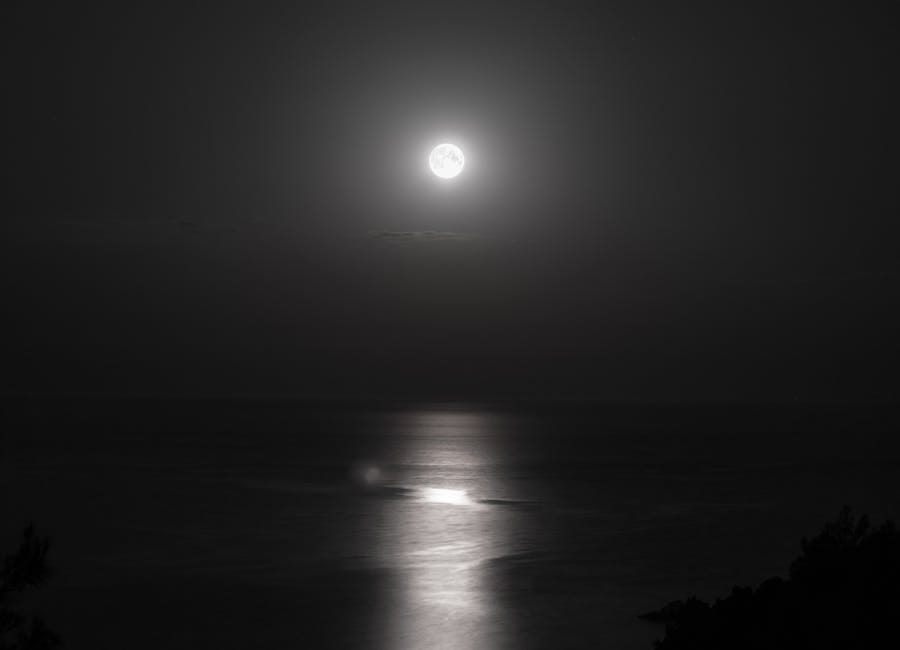
The moon moves through a complete cycle — new moon to full moon and back — every 29.5 days. That cycle has been tracked by every agricultural civilization in history, mapped by traditional medical systems from Ayurveda to Traditional Chinese Medicine, and dismissed by modern life as irrelevant.
The dismissal may be premature. Research on circadian and circalunar rhythms has documented correlations between lunar phases and human sleep, hormone production, and behavior. The mechanisms aren't fully understood. But the pattern — that the moon's cycle tracks something real in human physiology and psychology — is better supported than most people realize.
Astrology has been working with this pattern for several thousand years. Here's what the tradition says and how to use it.
Why the Moon and the Body Are Connected
The body is approximately 60% water. The moon's gravitational pull produces tides in the ocean. The same force that moves billions of gallons of seawater also, at a smaller scale, affects the fluid systems of the body — cerebrospinal fluid, lymph, blood. This is not mysticism. It's physics.
What the tradition adds is that the lunar cycle affects not just fluid movement but energy availability, emotional processing, and the quality of the nervous system's baseline state. The new moon correlates with a drawing-in of energy, a lower baseline output, a natural preparation for renewal. The full moon correlates with peak energy, peak emotional intensity, and maximum illumination — including of what you've been avoiding.
For the nervous system specifically, the cycle describes natural rhythms of activation and rest that map remarkably well onto how the body actually functions when it's not overriding its own signals.
The Four Phases and What They Mean
New Moon: Rest, Intention, Beginning
The new moon occurs when the Sun and Moon are conjunct — aligned in the same zodiac sign. The sky is dark. Energetically, this is the quietest phase of the cycle — low physical energy, high receptivity, natural orientation toward stillness and inward attention.
From a nervous system perspective, the new moon correlates with a parasympathetic state — the body's rest-and-digest mode. Pushing hard during this phase tends to feel effortful without commensurate output. Resting, setting intentions for the coming cycle, beginning new practices, and allowing time for quiet tend to feel more aligned.
It's also worth noting that new moon energy is somewhat raw and undefined. Whatever practice or commitment you begin at the new moon tends to have the character of the sign it occurs in — a new moon in Virgo supports beginning health routines; a new moon in Scorpio supports beginning deeper psychological or spiritual work.
Waxing Moon: Building, Momentum, Action
The waxing phase covers the two weeks between new and full moon, as the moon grows from a sliver to full luminosity. Energy builds during this phase — physical capacity, mental acuity, and emotional momentum all tend to be higher than in the new moon phase.
This is the phase for doing. Starting projects, building intensity in practice, increasing effort and commitment. The nervous system is more naturally in sympathetic tone — action-oriented, responsive, capable of sustained effort.
The first quarter moon (roughly one week after the new moon) often brings a moment of friction — the first challenge to the intention set at the new moon. Whether you push through that friction or accommodate it says a lot about where you are in your cycle.
Full Moon: Peak, Illumination, Release
The full moon occurs when the Sun and Moon are in opposition — maximum tension between the lunar and solar principles. The sky is at its brightest. Energy is at its peak.
The nervous system tends to run hotter during full moon periods. Sleep is often lighter or disrupted — this is one of the better-documented lunar effects on human physiology. Emotions are more accessible, more charged, closer to the surface. What has been building during the waxing phase tends to become visible at the full moon, sometimes in ways that feel sudden.
This makes the full moon both a powerful and a potentially destabilizing moment. Practices that work with rather than against this energy — restorative yoga, breath work, meditation — often feel more effective than pushing hard in training. The full moon rewards reflection more than effort.
It's also traditionally a time for releasing — letting go of what no longer serves, completing what was begun at the new moon, or consciously concluding a cycle before beginning another.
Waning Moon: Integration, Digestion, Letting Go
The two weeks between full moon and new moon see energy gradually receding. The nervous system naturally settles. This is the phase of digestion — processing what the full moon illuminated, integrating what the active waxing phase built.
Practices that support release and restoration feel most aligned here: yin yoga, restorative practice, longer savasana, sleep prioritization. Trying to build or push during the waning phase often produces diminishing returns — the body is preparing for the cycle's end, not gearing up for intensity.
The last quarter moon (roughly one week before the new moon) often brings a moment of surrender — a recognition that the current cycle is completing and that it's time to clear space rather than add more.
Your Moon Sign: Your Baseline Sensitivity
Beyond the lunar cycle, your natal Moon sign describes your baseline emotional sensitivity and how the lunar cycle tends to affect you personally. The full and new moons in your Moon sign's sign (or opposite sign) will tend to be the most personally charged lunations of each year.
A person with Moon in Scorpio will typically feel full moons in Scorpio and Taurus more intensely than other full moons. Someone with Moon in Pisces will be particularly attuned to Pisces and Virgo lunations. This isn't inevitability — it's a tendency worth tracking if you're interested in working consciously with lunar cycles.
Practical Application: A Simple Moon Cycle Practice
You don't need to restructure your life around the lunar calendar to work with these rhythms. A few simple anchors:
- Know when the new moon is. Most phone calendars and weather apps show lunar phases. At the new moon, take 5 minutes to note what you want to cultivate in the coming month.
- Adjust practice intensity by phase. Waxing = okay to push. Full = hold steady or restore. Waning = recovery. New = light or restorative only.
- Track your own response. Keep a brief log of how you feel across 2-3 lunar cycles. Your personal pattern will become visible.
- Don't override exhaustion in the dark of the moon. The days just before the new moon are the body's lowest energy point. Rest is productive, not lazy.
For those interested in combining lunar awareness with yoga nidra — one of the most effective practices for nervous system restoration — Online Yoga Planet covers yoga nidra certification and practice in depth. The combination of lunar timing and nidra practice is particularly powerful for nervous system regulation.
For the broader astrological context — how your natal Moon placement shapes your relationship to this cycle — the birth chart reading guides on this site are a starting point. Or for a comprehensive framework, explore the Evolutionary Astrology course at Be Well Academy.