Astrology for Highly Sensitive People: What Your Chart Reveals

The term "highly sensitive person" — coined by psychologist Elaine Aron in the 1990s — describes roughly 15–20% of the population who process sensory and emotional information more deeply than average. Loud environments feel genuinely overwhelming. Others' moods register physically. The line between empathy and absorption can blur.
If you identify as an HSP or empath, you've probably noticed that the world's standard operating mode — constant stimulation, social density, the expectation of quick emotional recovery — doesn't quite fit you.
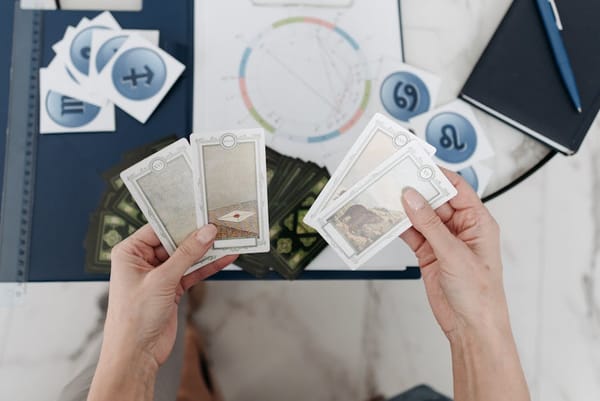
Astrology has a lot to say about this. The birth chart doesn't produce sensitivity or cause it. But it does map the terrain — which placements tend to correlate with high sensitivity, where that sensitivity is concentrated, and crucially, what kind of environment and practice most supports someone with this particular chart.
What Makes a "Sensitive" Chart
No single placement creates an HSP. High sensitivity tends to show up as a cluster of factors — placements that, together, describe a person whose inner world is rich, whose perceptual bandwidth is wide, and whose nervous system needs careful management as a result.
Here are the placements that appear most frequently in the charts of highly sensitive people.
Moon Sign and Emotional Architecture
The Moon governs emotional life, instinctive response, and how you process what you take in. Moon placements in water signs — Cancer, Scorpio, and Pisces — tend to describe the deepest emotional sensitivity. These placements absorb emotional information from the environment with unusual thoroughness. Things land. They stay. They need to be metabolized, not just processed.
A Moon in Scorpio person doesn't just feel things — they feel the undercurrent beneath what's being said. A Moon in Pisces person often has difficulty locating the boundary between their own emotions and the emotions they've picked up from the room.
Moon in Virgo or Gemini can also describe high sensitivity, though it tends to manifest more through the nervous system and mental overstimulation rather than purely emotional.
Hard aspects to the Moon — particularly from Saturn (emotional restriction, difficulty receiving support), Neptune (boundary dissolution), or Pluto (emotional intensity, depth of feeling) — tend to intensify whatever the Moon's baseline sensitivity already is.
Neptune: The Dissolution of Boundaries
Neptune is the planet of empathy, dissolution, and the permeability of self. Strong Neptune placements — Neptune in close aspect to the Sun, Moon, or Ascendant, or Neptune in the 1st house — often correlate with an unusually thin membrane between self and other.
This has gifts. Neptune-strong people are often genuinely psychically attuned, creatively gifted, and capable of a compassion that isn't performative. They feel what others feel because the boundary between them is thin.
The challenge is that the same permeability that produces empathy also makes it difficult to know what's yours. Emotional tiredness after social interaction, difficulty saying no, a tendency to shape-shift around others rather than maintaining a stable sense of self — these are Neptune themes that highly sensitive people often recognize.
Neptune's house position describes where this dissolution is most active. Neptune in the 7th house experiences it through intimate relationship. Neptune in the 12th house (its home) may find that solitude and spiritual practice are the primary ways of replenishing.
Chiron: The Wound That Opens You
Chiron, the asteroid sometimes called the "wounded healer," describes a place in the chart where early wounding created both vulnerability and unusual perceptive depth. The wound didn't close fully — which means it continues to be sensitive, and which also means it becomes the place from which genuine understanding and healing capacity develop.
Chiron in Pisces or the 12th house often describes sensitivity to spiritual suffering, collective pain, and the pain of others in diffuse, hard-to-name ways. Chiron in Cancer or the 4th house may describe early experiences that made the emotional environment of childhood feel unsafe, creating a finely calibrated detector for emotional tone in any room.
In evolutionary terms, Chiron's wound is also Chiron's gift. The areas of life where you were most sensitive, most hurt, most easily overwhelmed often become — once worked with — the areas of deepest understanding and capacity to support others.
12th House Placements
The 12th house in traditional astrology governs hidden things, isolation, spiritual retreat, and what lies beneath the surface of ordinary consciousness. It's also associated with collective unconscious material — the currents that run through humanity that most people don't consciously register.
People with significant 12th house placements often have unusual access to this material. They pick up on moods and undercurrents that aren't explicitly present in any conversation. They tend to need more solitude than average to replenish. Dreams and intuitive impressions may be vivid and informative in ways that feel unusual.
The 12th house isn't comfortable territory in day-to-day modern life, which tends to reward extroversion, quick processing, and constant availability. Understanding your 12th house placements as describing a genuine perceptual mode — not a deficit — can be one of the more useful reframes in a chart reading.
Water Sign Dominance
Charts with strong water — many planets in Cancer, Scorpio, and Pisces — tend to describe a person who leads with feeling rather than thinking, who processes experience emotionally before intellectually, and whose internal life is the primary terrain of experience.
Combined with a watery Ascendant (particularly Pisces rising or Cancer rising), water-dominant charts often describe people who are read by others as quiet, gentle, or "too sensitive" — people who in fact have a rich and complex inner life that simply doesn't translate easily into standard social formats.
Using Your Chart as a Guide, Not a Diagnosis
None of these placements mean you're broken, overwhelmed, or incapable of functioning in the world. They describe how your system is calibrated — what your perceptual bandwidth is, where you're porous, what you need to function well.
A Neptune–Ascendant conjunction in a chart isn't a problem to solve. It's a description of how that person takes in the world. The practical question becomes: given this, what environment, practice, and relationships most support this person? Where should they spend their energy rather than manage their sensitivity?
That question — which the chart helps answer — is more useful than the generic advice to "toughen up" or "not take things so personally."
Practical Support: What the Chart Suggests
For highly sensitive people, the birth chart often points toward specific types of practice that support their nervous system and emotional body:
- Strong Moon in water: Regular emotional processing rituals — journaling, therapy, somatic work. Enough alone time. Relationships where emotional depth is valued.
- Strong Neptune: Spiritual practice, creative expression, clear interpersonal boundaries. Learning to distinguish what's yours from what you've absorbed.
- Chiron prominent: Healing work, somatic therapy, eventually teaching or supporting others in the areas where you've been most wounded.
- 12th house emphasis: Solitude as medicine, not avoidance. Dream work. Retreat. Regular periods of withdrawal from stimulation.
Going Deeper
If you're highly sensitive and want to understand what your chart says about your particular configuration of sensitivity, a full birth chart reading — with a practitioner who understands this territory — can be clarifying in ways that generic HSP resources can't match.
For those who want to go further, Be Well Academy offers a course in Spiritual Foundations for Empaths with Karen Foote — a structured program for understanding and working with high sensitivity from a spiritual and somatic perspective.
If you're also interested in the embodied, movement-based dimension of sensitivity work, Online Yoga Planet covers yoga therapy for highly sensitive people — how nervous system-informed yoga practice supports the particular needs of HSPs.
→ Spiritual Foundations for Empaths on Be Well Academy ($99)